

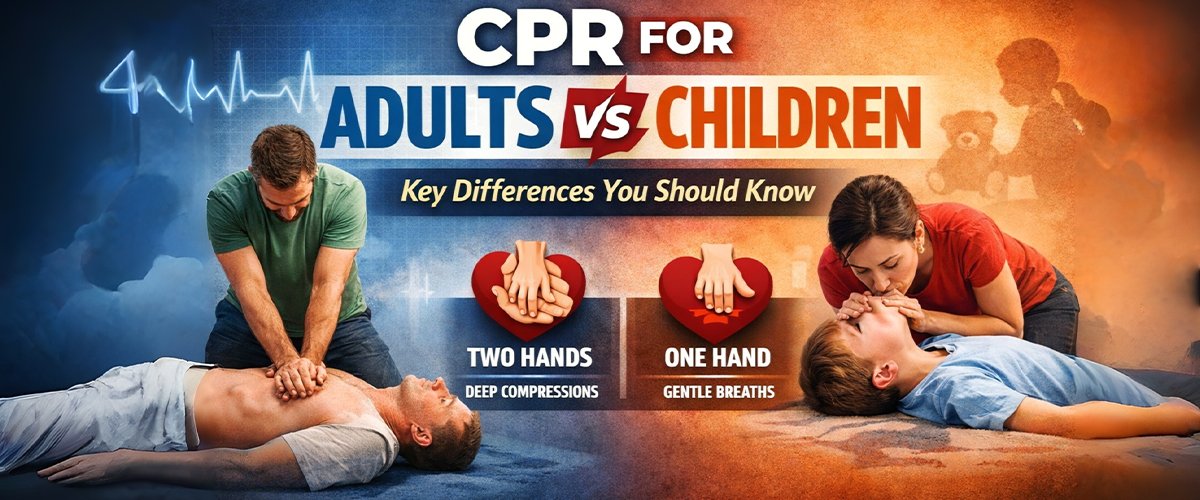
CPR for Adults vs Children: Key Differences You Should Know
March 23, 2026
Cardiopulmonary resuscitation (CPR) is one of the most important life-saving skills anyone can learn. In an emergency such as cardiac arrest, drowning, choking, or electric shock, CPR can keep oxygen flowing to the brain and vital organs until medical help arrives. However, many people don’t realize that adult and child CPR are not the same. Understanding the differences can make a huge difference in an emergency.
In this guide, we’ll explain the key differences between adult and child CPR simply and practically.
Why CPR Differences Matter
Adults and children have different body sizes, bone structures, lung capacity, and, most importantly, different causes of cardiac arrest.
- Adults usually suffer cardiac arrest due to heart problems.
- Children usually need CPR due to breathing problems such as drowning, choking, asthma, or infections.
Because of this, the CPR technique is slightly different for each age group.
1. Compression Depth Difference
One of the biggest differences between adult and child CPR is how deep the chest compressions should be.
For Adults:
- Compression depth should be about 5–6 cm
- Use two hands
- Press hard and fast in the center of the chest
For Children:
- Compression depth should be about 1/3 of the chest depth (around 4–5 cm)
- Usually use one hand instead of two
The reason for this difference is simple — children’s bones are softer and smaller, so too much force can cause injury.
2. Compression Rate (Same for Both)
The good news is that the compression speed is the same for adults and children.
- 100–120 compressions per minute
- Push hard, push fast
- Let the chest fully rise between compressions
A common tip is to follow the rhythm of songs like Stayin’ Alive for the correct speed.
3. Compression to Breath Ratio
Another important difference is the ratio of compressions to rescue breaths.
| Person | Compression: Breaths |
| Adult |
30: 2 |
| Child (1 rescuer) |
30: 2 |
| Child (2 rescuers) |
15: 2 |
Children usually need more breathing support because most child emergencies involve breathing problems rather than heart issues.
4. Hand Position Difference
Hand placement differs slightly between adults and children.
Adult CPR Hand Position:
- Place both hands in the center of the chest
- On the lower half of the breastbone
- Keep arms straight
Child CPR Hand Position:
- Use one hand in the center of the chest
- For very small children, you may use two fingers
This helps apply the right amount of pressure without causing harm
5. Rescue Breathing Importance
Rescue breaths are more important for children than adults.
- Adults can sometimes survive with compression-only CPR.
- Children usually need both compressions and breaths because their cardiac arrest often starts with breathing failure.
When giving rescue breaths:
- Tilt the head slightly back
- Pinch the nose
- Give a gentle breath for about 1 second
- Watch for chest rise
Quick Summary Table
| Step | Adult CPR | Child CPR |
| Hand Use | Two hands | One hand |
| Compression Depth | 5–6 cm | About 4–5 cm |
| Compression Rate | 100–120/min | 100–120/min |
| Ratio | 30:2 | 30:2 (1 rescuer) |
| Breaths Importance | Moderate | Very Important |
Final Thoughts
Knowing the difference between adult and child CPR can help you respond correctly and confidently in an emergency. The steps may look similar, but the compression depth, hand use, and importance of rescue breaths are key differences you should always remember.
Emergencies can happen anywhere — at home, at work, at school, or in public places. Learning CPR is not just a skill; it is a life-saving ability that can help you protect your family, friends, coworkers, or even a stranger.
The best way to feel confident in an emergency is by taking proper CPR training, where you can practice real techniques, understand emergency scenarios, and learn from certified instructors.
Because in a life-threatening situation, what you do in the first few minutes can save a life.
Popular Posts
-
Childcare First Aid Course Requirements in Australia: Everything You Need to Know
July 22, 2026Working in the childcare and early education sector comes with significant responsibilities. Whether you are...
-
First Aid Certificate Course Midland WA: Everything You Need to Know Before You Enrol
July 17, 2026Accidents and medical emergencies can happen anywhere—at home, in the workplace, at school, or even...
-
Paediatric Resuscitation Guidelines for Healthcare Workers: An Essential Guide for Australian Clinical Practice
July 8, 2026Paediatric emergencies are among the most challenging situations healthcare workers encounter. Unlike adult patients, infants...
-
Traumatic Cardiac Arrest Management: A Practical Guide for Faster Emergency Response in Australia
July 6, 2026Traumatic cardiac arrest (TCA) is one of the most critical medical emergencies a person can...
-
How to Use an AED in an Emergency: A Step-by-Step Guide for Australians
July 1, 2026Every minute counts during a cardiac emergency. When someone suffers a sudden cardiac arrest (SCA),...