

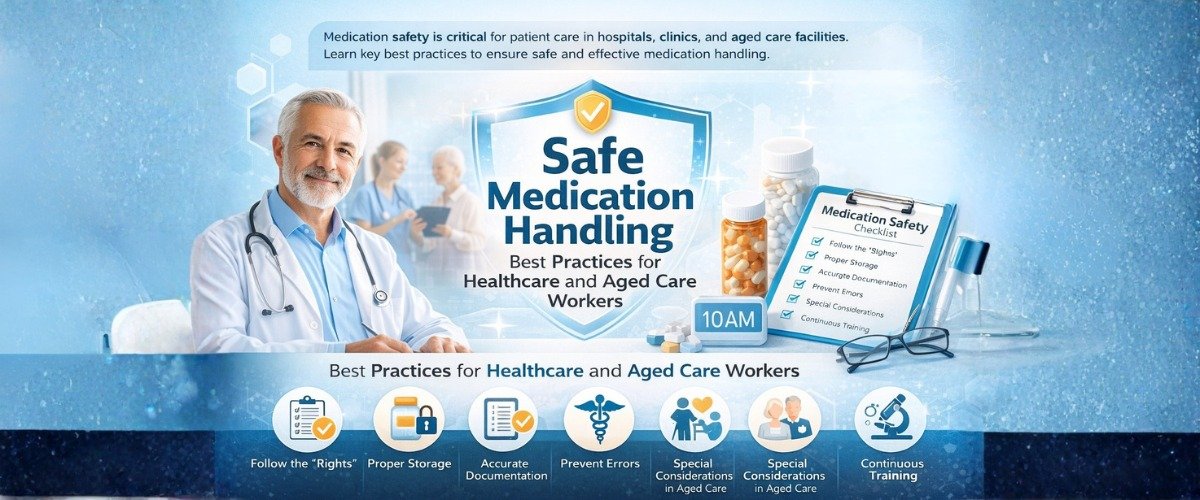
Safe Medication Handling: Best Practices for Healthcare and Aged Care Workers
March 19, 2026
Medication safety is a cornerstone of quality care. Whether in hospitals, clinics, or aged care facilities, safe medication handling protects patients from harm, prevents errors, and builds trust. For healthcare and aged care workers, following structured processes and staying vigilant can make all the difference.
This guide covers practical, real-world best practices to help you handle medications safely and confidently.
Why Safe Medication Handling Matters
Medication errors can lead to serious consequences—from mild side effects to life-threatening complications. Common causes include:
- Incorrect dosage or timing
- Misidentification of patients
- Poor documentation
- Communication gaps between staff
By following standardized procedures, you reduce risks and improve patient outcomes.
The “Rights” of Medication Administration
A simple but powerful framework is the “Five Rights” (often expanded to seven or more):
- Right Patient – Always verify identity using at least two identifiers
- Right Medication – Check the label against the prescription
- Right Dose – Ensure correct calculation and measurement
- Right Time – Administer at the prescribed time intervals
- Right Route – Oral, topical, injection, etc.
Additional best practices include:
- Right Documentation
- Right Reason
- Right Response (monitoring effects)
Proper Medication Storage
Correct storage ensures medication effectiveness and safety:
- Store medications at recommended temperatures
- Keep controlled drugs in locked cabinets.
- Separate internal and external medications
- Check expiry dates regularly.
- Follow facility-specific storage policies.
Improper storage can reduce drug effectiveness or make medications unsafe.
Accurate Documentation
Clear documentation is essential for continuity of care:
- Record medication immediately after administration.
- Avoid abbreviations that may confuse.
- Document missed or refused dose.
- Note any adverse reactions.
Good records help prevent duplication, missed doses, and medical errors.
Safe Administration Practices
Before administering medication:
- Wash your hands and follow hygiene protocols.
- Double-check medication labels.
- Prepare medications in a distraction-free environment.
- Never leave medication unattended.
During administration:
- Stay with the patient until the medication is taken.
- Observe for immediate reactions.
Preventing Medication Errors
Error prevention is about consistency and awareness:
- Follow checklists and protocols.
- Avoid multitasking during the medication round.
- Clarify unclear prescriptions with a supervisor or pharmacist.
- Use technology, such as electronic medication records, where available.
Always remember: If in doubt, don’t administer—verify first.
Special Considerations in Aged Care
Older adults are more vulnerable to medication-related issues due to:
- Multiple prescriptions (polypharmacy).
- Slower metabolism.
- Higher risk of side effects.
Best practices include:
- Monitoring for drug interactions
- Adjusting doses when required
- Observing changes in behavior or health
- Communicating regularly with healthcare teams and families
Handling Adverse Reactions
Even with precautions, reactions can occur. Be prepared to:
- Symptoms like rashes, dizziness, or breathing issues.
- Stop medication if required (as per protocol).
- Report immediately to a supervisor or medical professional.
- Document the incident clearly.
Quick action can prevent complications.
Infection Control & Hygiene
Medication handling must always follow infection control guidelines:
- Wash your hands before and after administration
- Use gloves when necessary.
- Avoid cross-contamination
- Dispose of sharps safely in designated containers.
Continuous Training & Compliance
Healthcare practices evolve, and so should your knowledge.
- Attend regular training sessions.
- Stay updated with guidelines and regulations.
- Participate in audits and safety checks.
- Encourage a culture of accountability and learning.
Safe medication handling is not just a task—it’s a responsibility that directly impacts lives. By following best practices, maintaining attention to detail, and prioritizing patient safety, healthcare and aged care workers can deliver high-quality, reliable care every day.
Consistency, communication, and care—these are the pillars of medication safety.
Popular Posts
-
Childcare First Aid Course Requirements in Australia: Everything You Need to Know
July 22, 2026Working in the childcare and early education sector comes with significant responsibilities. Whether you are...
-
First Aid Certificate Course Midland WA: Everything You Need to Know Before You Enrol
July 17, 2026Accidents and medical emergencies can happen anywhere—at home, in the workplace, at school, or even...
-
Paediatric Resuscitation Guidelines for Healthcare Workers: An Essential Guide for Australian Clinical Practice
July 8, 2026Paediatric emergencies are among the most challenging situations healthcare workers encounter. Unlike adult patients, infants...
-
Traumatic Cardiac Arrest Management: A Practical Guide for Faster Emergency Response in Australia
July 6, 2026Traumatic cardiac arrest (TCA) is one of the most critical medical emergencies a person can...
-
How to Use an AED in an Emergency: A Step-by-Step Guide for Australians
July 1, 2026Every minute counts during a cardiac emergency. When someone suffers a sudden cardiac arrest (SCA),...