
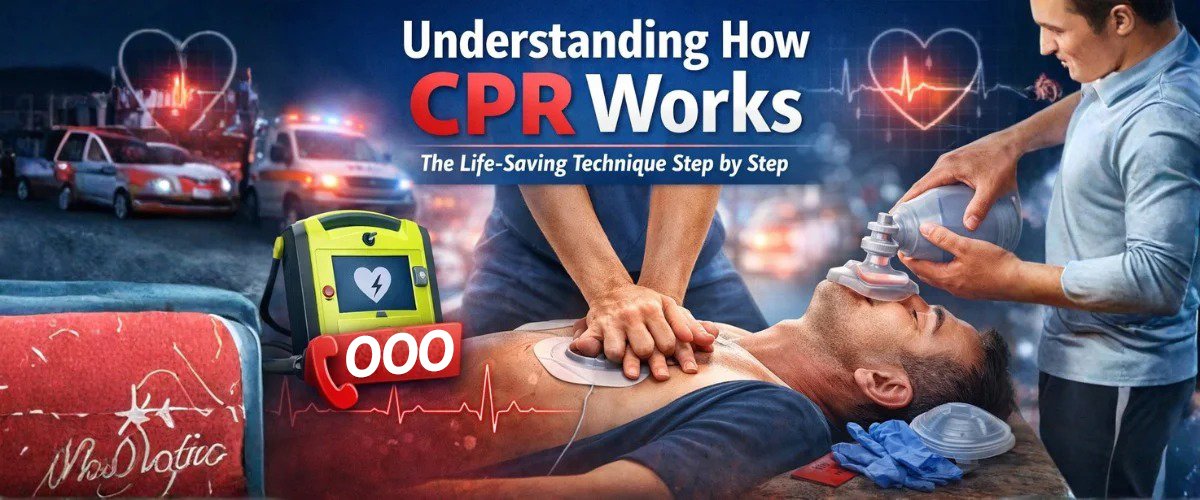
How CPR Works: Understanding the Life-Saving Technique Step by Step
March 13, 2026
When a person suddenly collapses due to cardiac arrest, every second becomes critical. The heart stops pumping blood effectively, preventing oxygen from reaching the brain and other vital organs. Within minutes, this lack of oxygen can cause severe damage or even death. This is where Cardiopulmonary Resuscitation, commonly known as CPR, becomes a life-saving intervention.
CPR is a simple yet powerful emergency technique designed to keep blood and oxygen circulating in the body until professional medical help arrives. Even people without medical backgrounds can learn and perform it effectively. Understanding how it works step by step can help anyone respond confidently in an emergency.
What Happens During Cardiac Arrest?
Cardiac arrest occurs when the heart suddenly stops beating or beats irregularly, preventing it from pumping blood through the body. This condition is different from a heart attack, although a heart attack can sometimes lead to cardiac arrest.
When the heart stops functioning properly, the brain begins to lose oxygen almost immediately. Permanent brain damage can start within four to six minutes if oxygen flow is not restored. CPR temporarily replaces the heart’s pumping action and supports breathing, giving emergency responders valuable time to arrive and provide advanced care.
Why CPR Is So Effective
The main purpose of CPR is to maintain circulation and oxygen delivery manually. It works through two primary actions: chest compressions and rescue breaths.
Chest compressions help pump blood through the heart and into the rest of the body. Each compression mimics the natural pumping motion of the heart. Rescue breaths deliver oxygen to the lungs, so the blood circulating carries oxygen to vital organs.
Together, these two actions keep the brain and other organs alive until the heart can be restarted with medical treatment or a defibrillator.
Step 1: Check the Scene and the Person
Before starting CPR, ensure the environment is safe for both you and the victim. Look for any potential hazards such as traffic, fire, or electrical risks.
Next, check if the person is responsive. Gently tap their shoulder and ask loudly if they are okay. If there is no response, check their breathing. If the person is not breathing normally or is only gasping, it may indicate cardiac arrest, and immediate action is needed.
Step 2: Call for Emergency Help
Once you identify that the person is unresponsive and not breathing properly, call emergency medical services right away or ask someone nearby to do so.
If an Automated External Defibrillator (AED) is available, have someone bring it immediately. AEDs are designed to help restart the heart during cardiac arrest and are commonly found in airports, malls, offices, and public buildings.
Step 3: Begin Chest Compressions
Place the heel of one hand in the center of the person’s chest, right between the nipples. Put your other hand on top and interlock your fingers.
Push hard and fast, allowing the chest to rise fully between compressions. The recommended rhythm is about 100 to 120 compressions per minute. The depth should be approximately 5-6 centimeters for adults.
Chest compressions are the most important part of CPR because they keep blood flowing to the brain and heart.
Step 4: Provide Rescue Breaths
After 30 compressions, give two rescue breaths if you are trained to do so.
Tilt the person’s head back slightly and lift the chin to open the airway. Pinch the nose closed, seal your mouth over theirs, and blow steadily for about one second. Watch for the chest to rise, indicating that air has entered the lungs.
If the chest does not rise, reposition the head and try again.
Step 5: Continue the Cycle
Repeat the cycle of 30 chest compressions followed by two rescue breaths. Continue this pattern without interruption until one of the following occurs:
- Emergency medical professionals arrive and take over
- The person starts breathing normally.
- You become physically unable to continu.e
If an AED becomes available, follow its voice instructions immediately while continuing CPR.
The Importance of Learning CPR
Many cardiac arrests happen outside hospitals, often at home, workplaces, or public spaces. Immediate CPR can double or even triple a person’s chance of survival.
Learning this life-saving skill equips individuals with the confidence to respond during emergencies. Training programs and a certified CPR Course can teach proper technique, build confidence, and ensure participants know how to act quickly and effectively when every second matters.
CPR is one of the most important emergency skills anyone can learn. Maintaining blood flow and oxygen circulation during cardiac arrest, it buys crucial time until professional medical care arrives.
Understanding how CPR works—and practicing the technique—can transform an ordinary bystander into a lifesaver. In emergencies, knowledge truly has the power to save lives.
Popular Posts
-
Childcare First Aid Course Requirements in Australia: Everything You Need to Know
July 22, 2026Working in the childcare and early education sector comes with significant responsibilities. Whether you are...
-
First Aid Certificate Course Midland WA: Everything You Need to Know Before You Enrol
July 17, 2026Accidents and medical emergencies can happen anywhere—at home, in the workplace, at school, or even...
-
Paediatric Resuscitation Guidelines for Healthcare Workers: An Essential Guide for Australian Clinical Practice
July 8, 2026Paediatric emergencies are among the most challenging situations healthcare workers encounter. Unlike adult patients, infants...
-
Traumatic Cardiac Arrest Management: A Practical Guide for Faster Emergency Response in Australia
July 6, 2026Traumatic cardiac arrest (TCA) is one of the most critical medical emergencies a person can...
-
How to Use an AED in an Emergency: A Step-by-Step Guide for Australians
July 1, 2026Every minute counts during a cardiac emergency. When someone suffers a sudden cardiac arrest (SCA),...