
Common Medication Administration Errors and How Proper Training Prevents Them
March 11, 2026
Medication administration is a critical responsibility in healthcare, disability support, and aged care settings. When medications are given correctly, they help manage illnesses, reduce symptoms, and improve patient well-being. However, mistakes during medication administration can lead to serious health risks.
Understanding common errors and learning how to prevent them is essential for healthcare workers and caregivers. Proper medication administration training equips professionals with the knowledge and skills needed to reduce these risks and ensure safe patient care.
What Is a Medication Administration Error?
A medication administration error happens when a patient receives medication incorrectly. This could involve the wrong medicine, an incorrect dose, or medication given at the wrong time.
These mistakes can occur due to:
- Lack of proper training
- Miscommunication among healthcare staff
- Poor documentation
- Misreading medication labels
- Rushing during medication rounds
Even small errors can affect patient health, which is why healthcare workers must follow strict safety procedures.
Common Medication Administration Errors
Below are some of the most common medication administration mistakes that occur in healthcare settings.
1. Wrong Medication
This error occurs when a patient is given a medication that was not prescribed to them.
Common causes include:
- Similar-looking medication packaging
- Misreading medication labels
- Picking the wrong medicine during busy shifts
This mistake can lead to severe reactions if the medication is not suitable for the patient.
2. Incorrect Dosage
Giving the wrong dosage is another frequent medication error.
Examples include:
- Administering too much medication
- Giving a dose that is too small
- Miscalculating medication measurements
Incorrect doses can result in harmful side effects or ineffective treatment.
3. Wrong Patient
Administering medication to the wrong person is a serious safety issue.
This can happen when healthcare workers:
- Fail to confirm the patient’s identity
- Skip patient identification checks.
- Confuse patients with similar names.
Proper patient verification is essential before giving any medication.
4. Incorrect Timing
Many medications must be taken at specific times to work effectively.
Timing errors may occur when:
- Medication rounds are delayed
- Staff forget the scheduled dose
- Documentation is unclear
Incorrect timing may reduce the effectiveness of the medication or cause complications.
5. Poor Documentation
Accurate documentation is vital in healthcare environments.
Documentation errors include:
- Forgetting to record administered medication
- Recording incorrect medication details
- Missing patient records
Poor documentation can lead to duplicate doses, missed medications, or confusion among healthcare providers.
How Proper Training Prevents Medication Errors
Professional medication administration training helps healthcare workers develop safe and reliable practices. Training programs focus on improving both knowledge and practical skills.
Key benefits of proper training include:
- Understanding safe medication handling procedures
- Learning accurate dosage calculations
- Improving patient identification practices
- Developing strong documentation habits
- Increasing confidence when administering medications
With proper training, healthcare professionals are more prepared to handle medication safely in real-world situations.
The “Rights” of Medication Administration
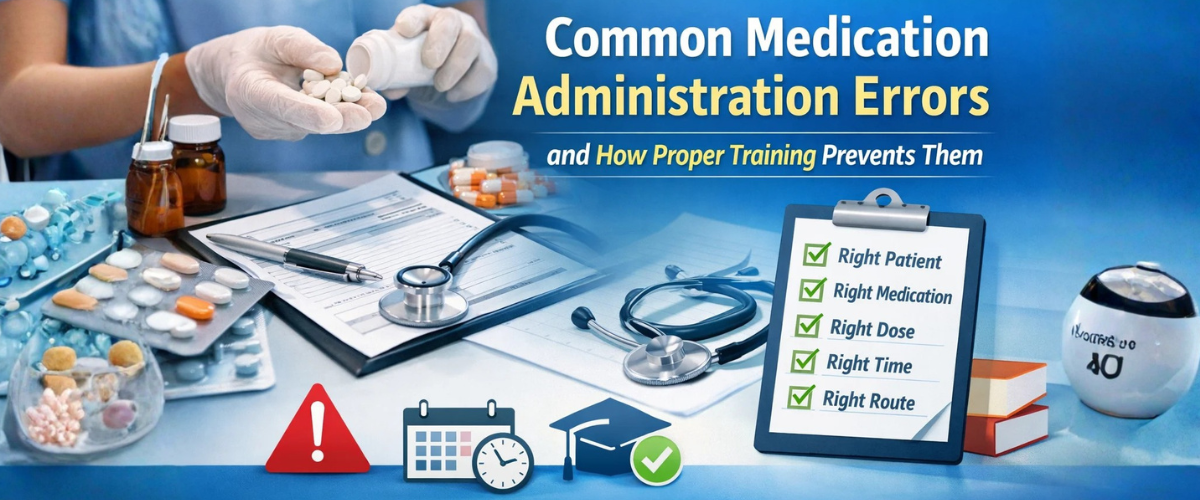
One of the most important safety practices taught in medication administration training is the principle known as the “rights” of medication administration.
Healthcare workers are trained to verify:
- Right patient
- Right medication
- Right dose
- Right time
- Right route
Following these checks significantly reduces the risk of medication mistakes.
Why Medication Training Is Important
Proper training does more than teach procedures—it promotes a culture of safety in healthcare settings.
Well-trained professionals can:
- Recognize potential medication risks.
- Communicate effectively with healthcare teams.
- Follow standardized medication procedures.
- Respond quickly if errors occur.
This improves both patient safety and the quality of care provided.
Medication errors are a serious concern in healthcare, but many of them can be prevented. Understanding the most common medication administration errors helps healthcare workers remain alert and cautious when handling medications.
Through proper medication administration training, healthcare professionals learn the correct procedures, safety protocols, and responsibilities involved in medication management. By applying these skills in daily practice, caregivers can protect patients and maintain high standards of care.
Popular Posts
-
Childcare First Aid Course Requirements in Australia: Everything You Need to Know
July 22, 2026Working in the childcare and early education sector comes with significant responsibilities. Whether you are...
-
First Aid Certificate Course Midland WA: Everything You Need to Know Before You Enrol
July 17, 2026Accidents and medical emergencies can happen anywhere—at home, in the workplace, at school, or even...
-
Paediatric Resuscitation Guidelines for Healthcare Workers: An Essential Guide for Australian Clinical Practice
July 8, 2026Paediatric emergencies are among the most challenging situations healthcare workers encounter. Unlike adult patients, infants...
-
Traumatic Cardiac Arrest Management: A Practical Guide for Faster Emergency Response in Australia
July 6, 2026Traumatic cardiac arrest (TCA) is one of the most critical medical emergencies a person can...
-
How to Use an AED in an Emergency: A Step-by-Step Guide for Australians
July 1, 2026Every minute counts during a cardiac emergency. When someone suffers a sudden cardiac arrest (SCA),...