
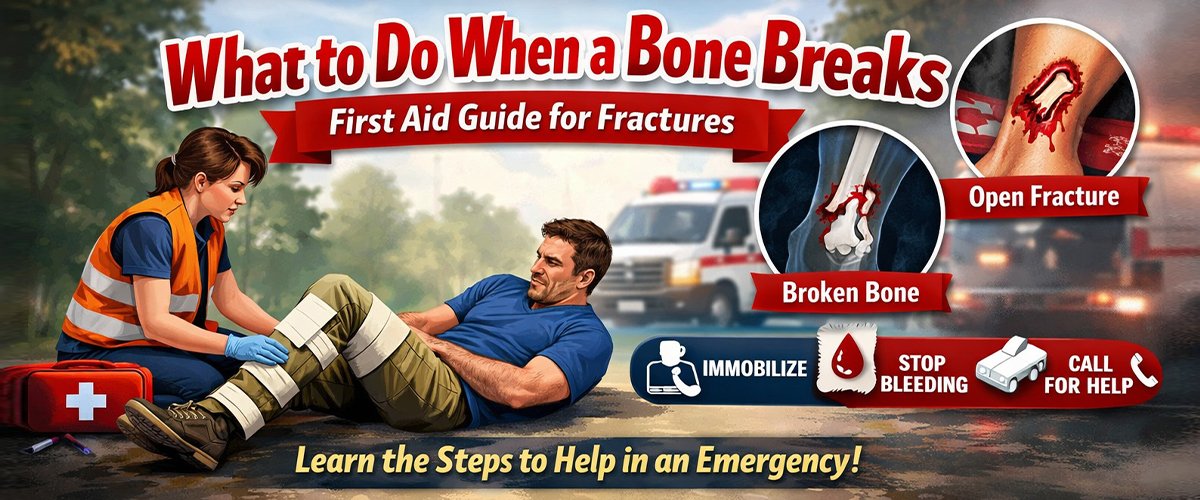
What to Do When a Bone Breaks: First Aid Guide for Fractures
March 10, 2026
Accidents can happen anywhere—at home, at work, during sports, or even while walking. A broken bone, also known as a fracture, is a common injury that requires quick and careful first aid before professional medical help arrives. Knowing what to do when a bone breaks can help reduce pain, prevent further damage, and improve recovery outcomes.
For healthcare workers, caregivers, and everyday individuals, learning proper fracture first aid is an essential skill. Training programs like those offered by Medisync Training teach practical emergency response techniques that can make a life-saving difference in critical situations.
This guide explains how to recognise a fracture and the essential first aid steps to take immediately.
What Is a Bone Fracture?
A fracture occurs when a bone cracks or breaks due to trauma, falls, accidents, or strong impact. Some fractures are minor cracks, while others may involve severe breaks where the bone shifts or pierces the skin.
Common types of fractures include:
- Closed fracture: The bone breaks but does not pierce the skin.
- Open fracture: The broken bone breaks through the skin and causes an open wound.
- Hairline fracture: A small crack in the bone.
- Displaced fracture: The bone fragments move out of alignment.
Regardless of the type, proper first aid is crucial to prevent complications.
Signs and Symptoms of a Broken Bone
Recognising a fracture quickly can help ensure the injured person receives the right care. Some common symptoms include:
- Severe pain at the injury site
- Swelling and bruising
- Difficulty moving the affected area
- Deformity or unusual positioning of the limb
- Tenderness when touched
- In severe cases, a bone may be visible through the skin.
If these symptoms appear after a fall or accident, treat the injury as a fracture and provide immediate first aid.
Step-by-Step First Aid for a Broken Bone
1. Stay Calm and Ensure Safety
The first step is to stay calm and check the surroundings for danger. Make sure the injured person is in a safe position and reassure them while waiting for help. Keeping the individual calm can prevent panic and reduce unnecessary movement.
2. Stop Any Bleeding
If the fracture is open and there is bleeding, gently apply pressure with a clean cloth or bandage. Do not push on the bone or try to reposition it. Cover the wound carefully to reduce the risk of infection.
3. Immobilise the Injured Area
One of the most important steps in fracture first aid is immobilisation, which means keeping the injured body part as still as possible. Moving the broken bone can worsen the injury and damage surrounding tissues.
You can stabilise the injured limb by:
- Using a splint, sling, or rigid object
- Supporting the joint above and below the injury
- Padding the area with cloth or clothing for comfort
Splints help keep the bone in place and reduce pain until medical professionals take over.
4. Apply Ice to Reduce Swelling
Applying a cold compress or ice pack wrapped in cloth can help reduce swelling and relieve pain. Avoid placing ice directly on the skin to prevent frostbite. Cold therapy is typically applied for short intervals until medical treatment is available.
5. Keep the Person Still and Comfortable
Encourage the injured person to remain still and avoid moving the affected limb. If possible, have them sit or lie down in a comfortable position. Keeping the injured area elevated may also help reduce swelling.
6. Watch for Signs of Shock
Serious injuries can sometimes cause shock. Symptoms may include:
- Pale or clammy skin
- Rapid breathing
- Weak pulse
- Dizziness
If these signs appear, help the person lie down, keep them warm, and seek medical assistance immediately.
7. Seek Medical Help Immediately
Even if the injury appears minor, a fracture requires professional medical evaluation. Call emergency services or take the injured person to the nearest hospital as soon as possible. Immediate treatment helps ensure proper bone alignment and healing.
What You Should NOT Do
When dealing with a fracture, certain actions can worsen the injury. Avoid the following:
- Do not try to push the bone back into place
- Do not move the injured person unnecessarily.
- Do not give food or drink if surgery may be required.
- Do not apply pressure directly on protruding bone.s
Proper handling is critical to prevent complications.
Why First Aid Training Matters
Knowing how to respond during a fracture emergency can significantly reduce pain, prevent further damage, and improve recovery. First aid training equips individuals with the confidence and knowledge needed to respond effectively during accidents.
Healthcare training programs, such as those provided by Medisync Training, focus on real-world emergency scenarios, practical skills, and nationally recognised certification. These courses help parents, educators, and professionals learn essential life-saving techniques.
A bone fracture can occur unexpectedly, but knowing the correct first aid steps can make a huge difference. By staying calm, immobilising the injury, controlling bleeding, and seeking medical help, you can protect the injured person and prevent further complications.
Learning first aid is a valuable skill for everyone. With proper training and awareness, you can act confidently in emergencies and help ensure the safety and well-being of those around you.
Popular Posts
-
Childcare First Aid Course Requirements in Australia: Everything You Need to Know
July 22, 2026Working in the childcare and early education sector comes with significant responsibilities. Whether you are...
-
First Aid Certificate Course Midland WA: Everything You Need to Know Before You Enrol
July 17, 2026Accidents and medical emergencies can happen anywhere—at home, in the workplace, at school, or even...
-
Paediatric Resuscitation Guidelines for Healthcare Workers: An Essential Guide for Australian Clinical Practice
July 8, 2026Paediatric emergencies are among the most challenging situations healthcare workers encounter. Unlike adult patients, infants...
-
Traumatic Cardiac Arrest Management: A Practical Guide for Faster Emergency Response in Australia
July 6, 2026Traumatic cardiac arrest (TCA) is one of the most critical medical emergencies a person can...
-
How to Use an AED in an Emergency: A Step-by-Step Guide for Australians
July 1, 2026Every minute counts during a cardiac emergency. When someone suffers a sudden cardiac arrest (SCA),...