

Choking Response Guide: Act Fast, Save a Life
April 2, 2026
Choking is a sudden and life-threatening emergency that can happen to anyone, anywhere — at home, in a restaurant, at school, or at work. It occurs when an object, usually food, blocks the airway and prevents a person from breathing properly. In such situations, every second counts. Knowing how to respond quickly and correctly can mean the difference between life and death.
This guide will explain how to recognize choking, what to do immediately, and how to help both adults and children safely.
What Is Choking?
Choking happens when something blocks the airway, stopping oxygen from reaching the lungs. Without oxygen, the brain can begin to suffer damage within minutes. That’s why immediate action is critical.
Signs of Choking
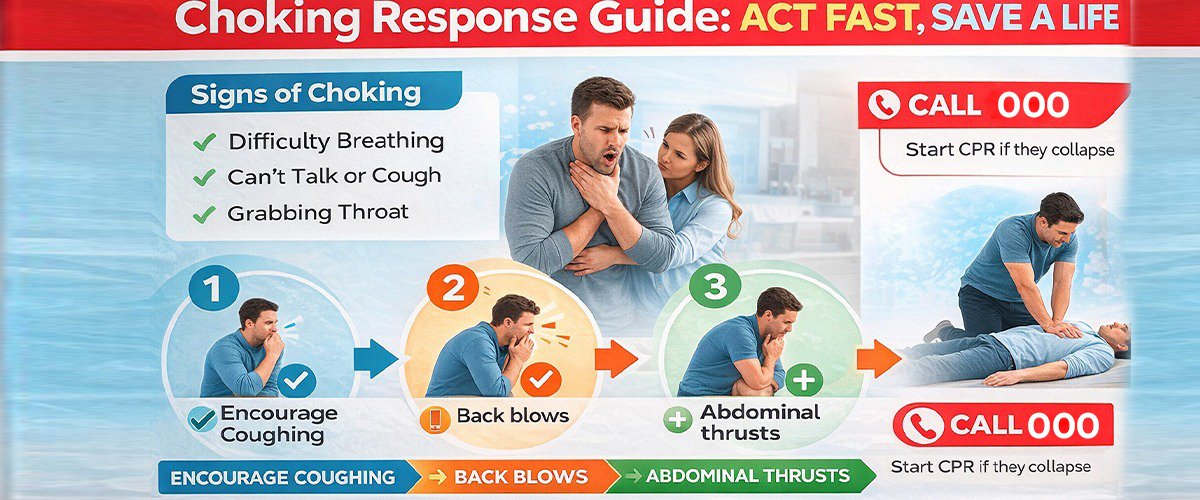
Recognizing choking early is the first step to saving a life. Look for these common signs:
- Inability to speak or cry
- Difficulty breathing or noisy breathing
- Hands clutching the throat (universal choking sign)
- Blue or pale lips and face
- Panic or distress
- Weak or no coughing
Mild vs Severe Choking
- Mild choking: The person can still cough or speak. Encourage them to keep coughing.
- Severe choking: The person cannot speak, breathe, or cough effectively. Immediate action is required.
What To Do in a Choking Emergency
1. Encourage Coughing
If the person can still cough:
- Let them continue coughing
- Do not interfere unless it gets worse
Coughing is the body’s natural way to clear the airway.
2. Give Back Blows
If coughing is not effective:
- Stand slightly behind the person
- Support their chest with one hand
- Lean them forward
- Give 5 firm back blows between the shoulder blades using the heel of your hand
Back blows create pressure that can dislodge the object.
3. Perform Abdominal Thrusts (Heimlich Maneuver)
If back blows don’t work:
- Stand behind the person
- Wrap your arms around their waist
- Make a fist and place it just above the navel
- Grasp your fist with the other hand
- Give quick inward and upward thrusts
Repeat until the object is expelled or the person becomes unconscious.
What If the Person Becomes Unconscious?
If the person collapses:
- Call emergency services immediately
- Start CPR (Cardiopulmonary Resuscitation)
- Check the mouth for visible obstruction before giving breaths
- Continue until help arrives
Choking First Aid for Children
Children are more prone to choking, especially under the age of 5.
For children:
- Use a gentler force
- Alternate between 5 back blows and 5 abdominal thrusts
For infants (under 1 year):
- Use 5 back blows and 5 chest thrusts
- Do NOT perform abdominal thrusts on infants
Always be extra careful with children due to their smaller and more delicate bodies.
What NOT To Do During Choking
Avoid these common mistakes:
- Do not slap the person on the back if they are upright and coughing
- Do not give food or water
- Do not blindly put your fingers in their mouth
- Do not delay action
- Do not panic
Incorrect actions can push the object deeper into the airway.
Common Causes of Choking
Understanding causes can help prevent choking:
- Eating too fast
- Talking or laughing while eating
- Large food pieces (meat, grapes, nuts)
- Small objects in children (toys, coins)
- Poor chewing
How to Prevent Choking
Prevention is always better than emergency response:
- Cut food into small pieces
- Chew food properly
- Avoid talking while eating
- Keep small objects away from children
- Supervise children during meals
Choking emergencies are sudden, scary, and dangerous — but they are also preventable and manageable with the right knowledge. Acting quickly, staying calm, and following the correct steps can save someone’s life in just a few minutes.
Remember this simple sequence:
Encourage coughing → Back blows → Abdominal thrusts → Call for help
Learning these simple techniques can help you act confidently in an emergency. Whether it’s a family member, coworker, or even a stranger, your quick response can make all the difference.
Because in a choking emergency, acting fast isn’t just important — it can save a life.
Popular Posts
-
Choking Response Guide: Act Fast, Save a Life
April 2, 2026Choking is a sudden and life-threatening emergency that can happen to anyone, anywhere — at...
-
CPR for Adults vs Children: Key Differences You Should Know
March 23, 2026Cardiopulmonary resuscitation (CPR) is one of the most important life-saving skills anyone can learn....
-
Safe Medication Handling: Best Practices for Healthcare and Aged Care Workers
March 19, 2026Medication safety is a cornerstone of quality care. Whether in hospitals, clinics, or aged care...
-
What are the 7 essential life skills every child needs?
March 17, 2026Children’s growth isn’t defined only by academic success—it’s also shaped by the life skills that...
-
How CPR Works: Understanding the Life-Saving Technique Step by Step
March 13, 2026When a person suddenly collapses due to cardiac arrest, every second becomes critical. The heart...