
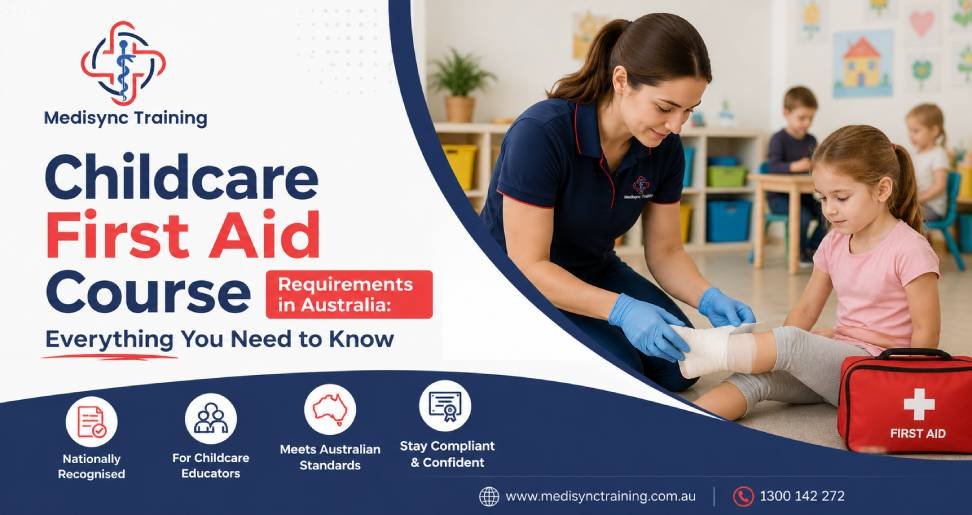
Childcare First Aid Course Requirements in Australia: Everything You Need to Know
July 22, 2026
Working in the childcare and early education sector comes with significant responsibilities. Whether you are an aspiring childcare educator, daycare worker, nanny, kindergarten teacher, or family daycare provider, knowing how to respond to emergencies can save lives. This is why completing a Childcare First Aid Course is an essential requirement for many childcare professionals across Australia.
Understanding the childcare first aid course requirements Australia can help you choose the right training provider and ensure you remain compliant with workplace and industry regulations. If you’re looking for nationally recognised first aid training, Medisync Training offers comprehensive first aid training services designed to prepare childcare professionals with the practical skills and confidence needed during emergencies.
Why Childcare First Aid Training Is Essential
Children are naturally curious and active, making them more vulnerable to injuries and medical emergencies. From choking incidents and allergic reactions to burns, fractures, and asthma attacks, childcare professionals must be prepared to act immediately before medical assistance arrives.
Australian childcare centres are required to have adequately trained staff capable of providing emergency first aid. Completing an accredited childcare first aid course ensures educators can confidently respond to incidents while maintaining a safe learning environment.
What Is the Required Childcare First Aid Qualification?
The nationally recognised qualification for childcare professionals is:
HLTAID012 – Provide First Aid in an Education and Care Setting
This course is specifically designed for individuals working with infants and children in education and care environments. It includes all the competencies covered in general first aid while placing additional emphasis on emergencies involving babies and young children. The qualification aligns with Australian first aid guidelines and may contribute to meeting requirements under the Education and Care Services National Law and Regulations.
Who Needs a Childcare First Aid Course?
A childcare first aid qualification is commonly required for:
- Childcare educators
- Early childhood teachers
- Family daycare providers
- Preschool staff
- Kindergarten teachers
- Outside School Hours Care (OSHC) workers
- Nannies and babysitters
- Children’s sports coaches
- School support staff
- Vacation care workers
Even parents and guardians often choose to complete this course for added peace of mind.
Childcare First Aid Course Requirements Australia
Before enrolling, there are several requirements that participants should understand.
1. Minimum Age
Many Registered Training Organisations require participants to be at least 14 years old. Younger participants may require parental consent depending on the training provider.
2. Unique Student Identifier (USI)
To receive a nationally recognised Statement of Attainment, students must have a valid Unique Student Identifier (USI).
3. Physical Ability
Participants are required to demonstrate practical CPR skills, including:
- Performing CPR on adult, child, and infant manikins
- Kneeling on the floor for at least two minutes of uninterrupted CPR
- Using an Automated External Defibrillator (AED)
- Completing practical first aid scenarios
These practical assessments are mandatory for successful course completion.
4. Language and Literacy Skills
Students should possess basic English language, literacy, and numeracy skills to:
- Understand course materials
- Complete written assessments
- Follow emergency procedures
- Record incident reports
5. Online Pre-Course Learning
Many providers now offer blended learning. Students usually complete online theory modules before attending face-to-face practical training.
What Will You Learn?
A childcare first aid course covers a wide range of emergency situations, including:
- CPR for adults, children, and infants
- Choking emergencies
- Asthma management
- Anaphylaxis response
- Allergic reactions
- Bleeding and wound care
- Fractures and sprains
- Burns and scalds
- Head and spinal injuries
- Seizures
- Poisoning
- Heat exhaustion and dehydration
- Medical emergencies involving infants
- Emergency action planning
The training combines classroom theory with realistic practical scenarios to build confidence.
How Long Does the Course Take?
The duration varies depending on the delivery method.
Generally, students complete:
- Online learning (approximately 3–6 hours)
- Face-to-face practical assessment (around 4–7 hours)
Some providers also offer intensive one-day classroom courses.
How Long Is the Certificate Valid?
Although the qualification itself does not technically expire, Australian Resuscitation Council recommendations encourage participants to:
- Renew HLTAID012 every three years
- Refresh CPR skills every 12 months
Keeping certifications current ensures childcare professionals remain familiar with the latest emergency response guidelines.
Why Choose Medisync Training?
Selecting the right training provider is just as important as completing the course itself.
Medisync Training has become a trusted name in Australia by providing nationally recognised first aid courses delivered by experienced trainers. Their practical approach ensures participants develop real-life emergency response skills rather than simply completing theoretical assessments.
Benefits of choosing Medisync Training include:
- Nationally recognised first aid qualifications
- Experienced and supportive trainers
- Practical, hands-on learning
- Flexible training schedules
- Modern training equipment
- Courses suitable for childcare professionals, educators, and parents
- High-quality learning resources
Whether you’re entering the childcare industry or renewing your certification, Medisync Training helps you gain the confidence needed to respond effectively during emergencies.
Career Benefits of Completing a Childcare First Aid Course
Holding a current childcare first aid certificate offers several professional advantages:
- Meets employer expectations
- Improves employability
- Supports workplace compliance
- Builds confidence in emergency situations
- Demonstrates commitment to children’s safety
- Opens opportunities in childcare centres, schools, and family daycare services
Many Australian employers prioritise applicants who already possess current first aid qualifications.
Tips Before Attending Your Course
To get the most from your training:
- Complete all online learning before practical sessions.
- Wear comfortable clothing suitable for CPR practice.
- Bring valid photo identification.
- Arrive early for registration.
- Participate actively in practical exercises.
- Ask questions whenever you’re unsure about emergency procedures.
Final Thoughts
Meeting the childcare first aid course requirements Australia is an important step for anyone planning to work with children. A nationally recognised HLTAID012 Provide First Aid in an Education and Care Setting qualification equips childcare professionals with essential life-saving skills that can make a critical difference during emergencies.
If you’re looking for trusted training delivered by experienced professionals, Medisync Training is an excellent choice. Their comprehensive first aid training services provide the practical knowledge and nationally recognised qualifications needed to help childcare professionals meet Australian industry standards while creating safer environments for children.
Popular Posts
-
Childcare First Aid Course Requirements in Australia: Everything You Need to Know
July 22, 2026Working in the childcare and early education sector comes with significant responsibilities. Whether you are...
-
First Aid Certificate Course Midland WA: Everything You Need to Know Before You Enrol
July 17, 2026Accidents and medical emergencies can happen anywhere—at home, in the workplace, at school, or even...
-
Paediatric Resuscitation Guidelines for Healthcare Workers: An Essential Guide for Australian Clinical Practice
July 8, 2026Paediatric emergencies are among the most challenging situations healthcare workers encounter. Unlike adult patients, infants...
-
Traumatic Cardiac Arrest Management: A Practical Guide for Faster Emergency Response in Australia
July 6, 2026Traumatic cardiac arrest (TCA) is one of the most critical medical emergencies a person can...
-
How to Use an AED in an Emergency: A Step-by-Step Guide for Australians
July 1, 2026Every minute counts during a cardiac emergency. When someone suffers a sudden cardiac arrest (SCA),...