
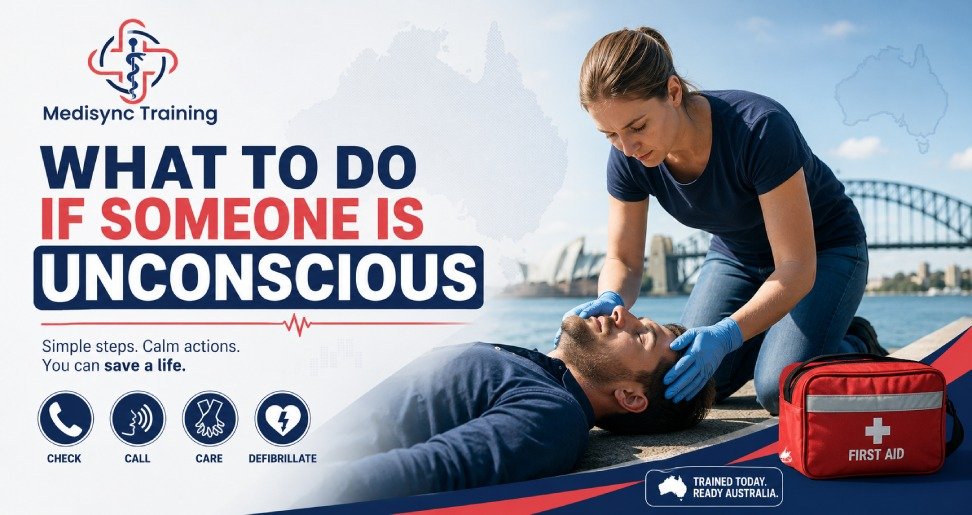
What To Do If Someone Is Unconscious: A Complete First Aid Guide for Australians
May 21, 2026
When a person suddenly collapses and becomes unresponsive, panic can take over quickly. Knowing what to do if someone is unconscious can make the difference between life and death before emergency services arrive. In Australia, thousands of medical emergencies happen every year at homes, workplaces, sporting events, and public spaces, making first aid knowledge essential for everyone.
Whether the person is unconscious but breathing or unconscious and not breathing, acting quickly and correctly is critical. This guide explains the proper steps based on Australian first aid recommendations and practical emergency response techniques.
Understanding Unconsciousness
An unconscious person is someone who cannot respond to voices, touch, or movement. They may appear asleep, but they cannot be woken easily and are unaware of their surroundings.
Unconsciousness can happen suddenly or gradually and may last for a few seconds, minutes, or longer depending on the cause. Immediate action is always necessary because breathing problems, cardiac arrest, or brain injury can develop rapidly.
According to Australian first aid guidelines, the first step is always to follow the DRSABCD action plan:
- D – Danger
- R – Response
- S – Send for help
- A – Airway
- B – Breathing
- C – CPR
- D – Defibrillation
These steps help ensure the person receives safe and effective emergency care.
What To Do If Someone Is Unconscious But Breathing
One of the most common emergencies is finding someone unconscious but still breathing normally. Many Australians are unsure how to respond correctly in this situation.
If you are wondering what to do if someone is unconscious but breathing, follow these steps carefully:
1. Check for Danger
Before helping, ensure the environment is safe for both you and the casualty. Look for:
- Traffic
- Electrical hazards
- Fire or smoke
- Water hazards
- Dangerous objects
Never place yourself in danger while assisting another person.
2. Check for Responsiveness
Gently tap the person’s shoulders and ask loudly:
“Can you hear me?”
“Are you okay?”
If there is no response, treat the situation as an emergency.
3. Call Triple Zero (000)
In Australia, call 000 immediately and request an ambulance. Provide clear information about the person’s condition and location.
4. Open the Airway
Tilt the head back gently and lift the chin to open the airway. Check for anything blocking the mouth or throat.
5. Check Breathing
Look for chest movement, listen for breathing sounds, and feel for airflow.
If they are breathing normally:
- Place them in the recovery position
- Keep monitoring their breathing
- Stay with them until paramedics arrive
The recovery position helps prevent choking if the person vomits and keeps the airway open.
What To Do If Someone Is Unconscious And Not Breathing
A far more serious emergency occurs when a person becomes unconscious and stops breathing normally. Knowing what to do if someone is unconscious and not breathing is essential because brain damage can begin within minutes.
Step-by-Step CPR Guide
1. Call 000 Immediately
Put your phone on speaker mode if possible while beginning CPR.
2. Start Chest Compressions
- Place the heel of one hand in the centre of the chest
- Put your other hand on top
- Push hard and fast
- Aim for 100–120 compressions per minute
- Compress approximately one-third of the chest depth
3. Give Rescue Breaths (If Trained)
After 30 compressions:
- Tilt the head back
- Lift the chin
- Pinch the nose
- Give 2 breaths
Continue the cycle of 30 compressions and 2 breaths.
4. Use an AED if Available
An Automated External Defibrillator (AED) can restart the heart during cardiac arrest. Many Australian shopping centres, gyms, schools, and workplaces now have AEDs available.
Continue CPR until:
- The person starts breathing
- Paramedics arrive
- You are physically unable to continue
Australian first aid authorities strongly recommend learning CPR through certified training programs because hands-on practice builds confidence during real emergencies.
What Are The 10 Causes Of Unconsciousness?
Many people ask, what are the 10 causes of unconsciousness? Understanding possible causes helps explain why unconsciousness should never be ignored.
Here are some common causes:
- Cardiac arrest
- Stroke
- Head injury
- Severe blood loss
- Low blood sugar (hypoglycaemia)
- Drug or alcohol overdose
- Seizures
- Lack of oxygen
- Heatstroke
- Severe allergic reaction (anaphylaxis)
Other medical conditions such as diabetes, infections, dehydration, or poisoning may also lead to unconsciousness.
Because the exact cause is often unclear, first aiders should focus on maintaining breathing and circulation while waiting for emergency professionals.
The 5 Stages Of Unconsciousness Explained
Understanding the 5 stages of unconsciousness can help identify how serious the situation may be.
1. Confusion
The person appears disoriented, forgetful, or unable to answer properly.
2. Drowsiness
They struggle to stay awake and respond slowly.
3. Stupor
The person only reacts to strong physical stimulation or pain.
4. Coma
There is no meaningful response to voice or touch.
5. Brain Death
Complete and irreversible loss of brain function.
Even mild confusion can quickly progress into a medical emergency, so monitoring and professional medical assessment are extremely important.
Common Mistakes Australians Make During First Aid Emergencies
During emergencies, people often panic and make avoidable mistakes. Here are some things you should NEVER do:
- Do not give food or water to an unconscious person
- Do not shake them violently
- Do not leave them alone
- Do not place a pillow under their head
- Do not delay calling 000
Quick action saves lives.
Why First Aid Training Matters
Reading about first aid is useful, but practical training provides the confidence to act under pressure. Many Australians hesitate during emergencies because they fear doing something wrong.
Professional training helps people learn:
- CPR techniques
- Recovery position skills
- Emergency response planning
- AED usage
- Airway management
This is where Medisync Training plays an important role. Their nationally recognised first aid and CPR courses help Australians gain real-world emergency response skills that can be used at home, work, schools, construction sites, and sporting venues.
For workplaces across Australia, having properly trained staff is not just beneficial — it can save lives during critical incidents.
Final Thoughts
Knowing what to do if someone is unconscious is one of the most valuable life skills any Australian can learn. Whether the person is unconscious but breathing or unconscious and not breathing, staying calm and following the correct first aid steps can dramatically improve survival outcomes.
Always remember:
- Call Triple Zero (000)
- Check breathing
- Use the recovery position if breathing normally
- Start CPR if not breathing
- Continue care until help arrives
First aid knowledge empowers ordinary people to become lifesavers in extraordinary moments.
Popular Posts
-
Warning Signs of Heart Attack: An Essential Action Plan
September 7, 2026A heart attack can happen suddenly, and recognising the warning signs early can make a...
-
How Proper Medication Training Reduces Risks for Vulnerable Adults
September 2, 2026Vulnerable adults may rely on careers and support workers to help them manage their medicines...
-
Burns First Aid Treatment Steps Australia: What to Do When a Burn Happens
August 12, 2026Burn injuries can happen unexpectedly at home, at work, in childcare settings, or while cooking....
-
Common CPR Mistakes That Reduce Survival Rates
July 3, 2026When someone suffers a sudden cardiac arrest, every second counts. Immediate, high-quality CPR can significantly...
-
How to Calm Someone Having a Panic Attack: A Practical Guide for Australians
June 5, 2026Panic attacks can happen unexpectedly and often leave both the person experiencing them and those...