
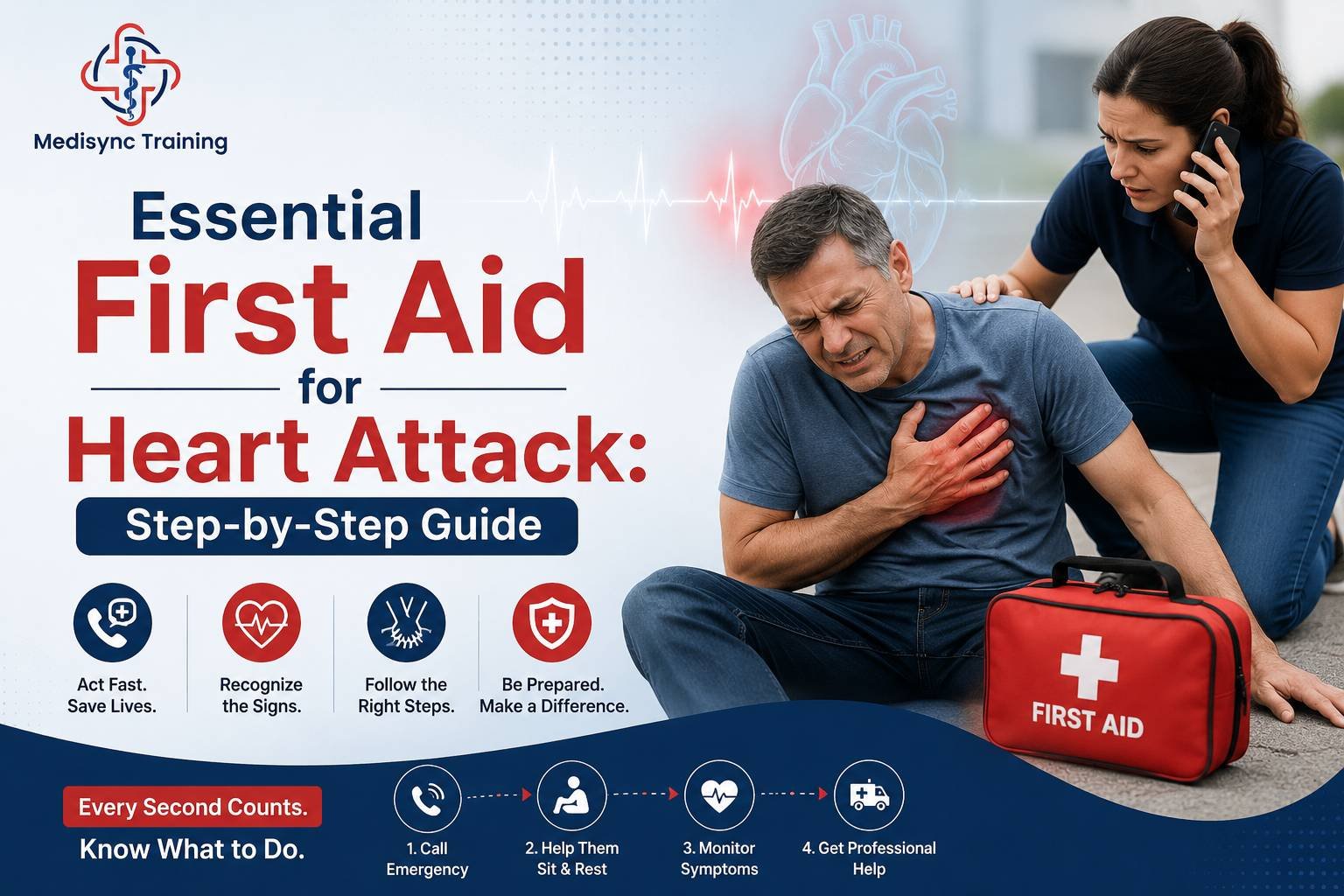
Essential First Aid for Heart Attack: Step-by-Step Guide
May 15, 2026
A heart attack is a life-threatening medical emergency that needs immediate attention. It occurs when blood supply to the heart muscle is reduced or completely blocked, often because of a clot in the coronary arteries. Without urgent treatment, heart tissue begins to die, increasing the risk of severe complications or death. Quick recognition and proper first aid for heart attack can improve a person’s chances of survival and recovery.
Understanding what to do during those first critical minutes can help you respond calmly and effectively.
Understanding a Heart Attack
A heart attack, medically known as myocardial infarction, happens when oxygen-rich blood cannot reach part of the heart. The blockage is commonly caused by fatty deposits called plaque that rupture and trigger clot formation. When this happens, the affected area of the heart is deprived of oxygen and starts becoming damaged.
Although people often confuse heart attacks with cardiac arrest, they are different emergencies. During a heart attack, the heart usually continues beating, while cardiac arrest means the heart suddenly stops pumping blood effectively.
Warning Signs You Should Never Ignore
Recognizing symptoms early is essential because treatment is most effective when provided quickly.
Common heart attack symptoms include:
- Pressure, pain, or tightness in the chest
- Pain spreading to the shoulders, arms, neck, jaw, or upper back
- Difficulty breathing
- Sudden sweating
- Feeling dizzy or faint
- Nausea or vomiting
- Extreme tiredness or weakness
Some individuals, especially women, older adults, and people with diabetes, may experience less obvious symptoms such as indigestion-like discomfort or unusual fatigue.
Step-by-Step First Aid for Heart Attack
1. Call Emergency Help Without Delay
If you suspect someone is having a heart attack, contact emergency medical services immediately.
Never wait for symptoms to disappear on their own. A delay in treatment can worsen heart damage significantly. Ambulances are ideal because trained professionals can begin treatment while transporting the patient.
2. Keep the Person Resting
Ask the person to stop all physical activity and sit in a comfortable, supported position.
A semi-sitting posture often works best because it reduces strain on the heart and makes breathing easier. Keep them relaxed and reassure them that help is coming.
Tight clothing such as belts, collars, or ties should be loosened to improve comfort.
3. Give Aspirin if Safe
If the person is awake, not allergic to aspirin, and has no medical restrictions, they may be advised to chew an aspirin while waiting for emergency help.
Aspirin may help reduce clot growth and improve blood flow. However, it should only be taken when appropriate and should never delay calling emergency services.
4. Assist With Prescribed Medication
Some people with known heart conditions carry prescribed medications such as nitroglycerin.
Help them take their medication according to their doctor’s instructions. Never offer medication prescribed for someone else.
5. Stay With the Patient
Do not leave the individual alone unless necessary to call for help.
Continue observing their breathing, responsiveness, and overall condition. Be prepared to act if they lose consciousness or stop breathing normally.
If the Person Collapses or Stops Breathing
A heart attack can sometimes progress into cardiac arrest. If the person becomes unresponsive and is not breathing normally, immediate CPR is necessary.
Begin CPR
To perform hands-only CPR:
- Place both hands in the center of the chest.
- Push hard and fast.
- Maintain a rhythm of approximately 100 to 120 compressions per minute.
- Allow the chest to rise fully after each compression.
Continue chest compressions until emergency responders arrive or the person regains normal breathing. Hands-only CPR is effective for untrained responders in many emergency situations.
Use an AED When Available
An Automated External Defibrillator (AED) can be extremely helpful if the person becomes unconscious.
To use it:
- Turn the device on
- Follow the spoken instructions
- Attach pads correctly
- Stand clear during rhythm analysis or shock delivery
AEDs are designed for public use, so even people without medical backgrounds can often use them safely.
Mistakes to Avoid During a Heart Attack
In emergencies, avoiding the wrong actions is just as important as doing the right ones.
Do not:
- Ignore symptoms
- Let the person continue walking or working
- Give food or beverages
- Allow them to drive themselves
- Delay medical assistance while “waiting to see”
Fast action is the most valuable response.
Prevention Tips for Better Heart Health
Although not all heart attacks can be prevented, certain habits can lower the risk.
Helpful preventive measures include:
- Eating nutritious meals with less saturated fat
- Exercising consistently
- Managing stress effectively
- Avoiding tobacco use
- Monitoring blood pressure and cholesterol
- Maintaining a healthy body weight
- Attending regular health checkups
Building these habits can improve long-term cardiovascular health.
Why First Aid Training Is Valuable
Knowing emergency response skills can make a huge difference when someone around you experiences a cardiac emergency.
A certified first aid course Midland can teach practical techniques such as CPR, AED usage, wound care, and emergency assessment. Training helps people feel more prepared and confident when facing medical emergencies at home, school, or work.
Whether you are a parent, employee, teacher, or caregiver, formal first aid knowledge is a useful life skill.
Final Thoughts
A heart attack can happen suddenly, but the response should never be delayed. Learning proper first aid for heart attack enables you to recognize symptoms quickly, contact emergency help, support the patient, and provide CPR if necessary.
The first few minutes are often the most critical. By staying informed and considering professional training such as a first aid course Midland, you can be better equipped to respond effectively when every second matters.
Popular Posts
-
Warning Signs of Heart Attack: An Essential Action Plan
September 7, 2026A heart attack can happen suddenly, and recognising the warning signs early can make a...
-
How Proper Medication Training Reduces Risks for Vulnerable Adults
September 2, 2026Vulnerable adults may rely on careers and support workers to help them manage their medicines...
-
Burns First Aid Treatment Steps Australia: What to Do When a Burn Happens
August 12, 2026Burn injuries can happen unexpectedly at home, at work, in childcare settings, or while cooking....
-
Common CPR Mistakes That Reduce Survival Rates
July 3, 2026When someone suffers a sudden cardiac arrest, every second counts. Immediate, high-quality CPR can significantly...
-
How to Calm Someone Having a Panic Attack: A Practical Guide for Australians
June 5, 2026Panic attacks can happen unexpectedly and often leave both the person experiencing them and those...