

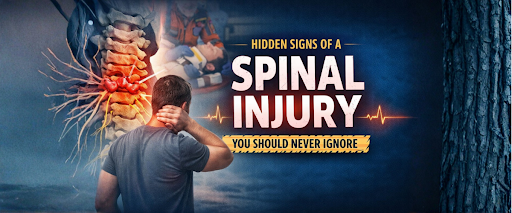
Hidden Signs of a Spinal Injury You Should Never Ignore
April 28, 2026
Spinal injuries are among the most serious medical emergencies—but they don’t always look dramatic at first. A person may walk, talk, or even feel “fine” immediately after an accident, only to develop severe complications later.
Understanding the hidden signs of a spinal injury can help you act quickly and prevent permanent damage—or even save a life.
What Is a Spinal Injury?
The spine is made up of 33 bones (vertebrae) that protect the spinal cord—a vital bundle of nerves responsible for movement, sensation, and body function.
When trauma occurs (like a fall, accident, or impact), the spinal cord can be compressed, damaged, or even severed. This can lead to temporary or permanent disability, depending on severity.
Hidden Signs You Should Never Ignore
Spinal injuries are not always obvious. Here are subtle warning signs you must take seriously:
1. Tingling or Numbness
A “pins and needles” feeling in the arms, legs, or below the injury site may indicate nerve damage.
2. Weakness in Limbs
Difficulty moving arms or legs—or feeling unusually weak—can signal spinal cord involvement.
3. Neck or Back Pain
Even mild pain after an accident should not be ignored, especially if it worsens over time.
4. Loss of Coordination
Struggling to walk straight or maintain balance is a red flag.
5. Breathing Difficulties
Injuries higher up in the spine can affect breathing muscles.
6. Unusual Body Position
Head or neck appearing twisted or misaligned can indicate serious trauma.
7. Loss of Bladder or Bowel Control
This is a critical sign of possible spinal cord damage.
8. Dizziness or Confusion
Often linked with head and spinal injuries together.
Common Causes of Spinal Injuries
Spinal trauma can happen in everyday situations, including:
- Road traffic accidents
- Falls from height (stairs, ladders, roofs)
- Sports injuries (football, diving, horse riding)
- Workplace accidents
- Sudden impact to the head or neck
What To Do If You Suspect a Spinal Injury
Taking the wrong step can worsen the injury. Follow these steps carefully:
1. Keep the Person Still
Ask them not to move. Avoid twisting or turning their body.
2. Support the Head and Neck
Keep the head aligned with the spine to prevent further damage.
3. Call Emergency Help Immediately
Professional medical care is critical.
4. Check Breathing
If unconscious, ensure the airway is open—even if slight movement is needed.
5. Avoid Moving Unless Necessary
Only move the person if they are in immediate danger (fire, traffic, etc.), and do so with extreme care.
Why Early Action Matters
Spinal injuries often involve secondary damage caused by swelling or bleeding after the initial trauma. Quick and careful handling can:
✔ Prevent paralysis
✔ Reduce long-term disability
✔ Improve survival chances
Pro Tip: When in Doubt, Assume the Worst
If someone has experienced a significant impact—especially to the head, neck, or back—always assume a spinal injury until proven otherwise.
Final Thoughts
Spinal injuries don’t always scream for attention—they often whisper through subtle symptoms. Ignoring these warning signs can lead to life-changing consequences.
Being aware, staying calm, and acting quickly can make all the difference.
Popular Posts
-
Childcare First Aid Course Requirements in Australia: Everything You Need to Know
July 22, 2026Working in the childcare and early education sector comes with significant responsibilities. Whether you are...
-
First Aid Certificate Course Midland WA: Everything You Need to Know Before You Enrol
July 17, 2026Accidents and medical emergencies can happen anywhere—at home, in the workplace, at school, or even...
-
Paediatric Resuscitation Guidelines for Healthcare Workers: An Essential Guide for Australian Clinical Practice
July 8, 2026Paediatric emergencies are among the most challenging situations healthcare workers encounter. Unlike adult patients, infants...
-
Traumatic Cardiac Arrest Management: A Practical Guide for Faster Emergency Response in Australia
July 6, 2026Traumatic cardiac arrest (TCA) is one of the most critical medical emergencies a person can...
-
How to Use an AED in an Emergency: A Step-by-Step Guide for Australians
July 1, 2026Every minute counts during a cardiac emergency. When someone suffers a sudden cardiac arrest (SCA),...